 Oil-
Oil-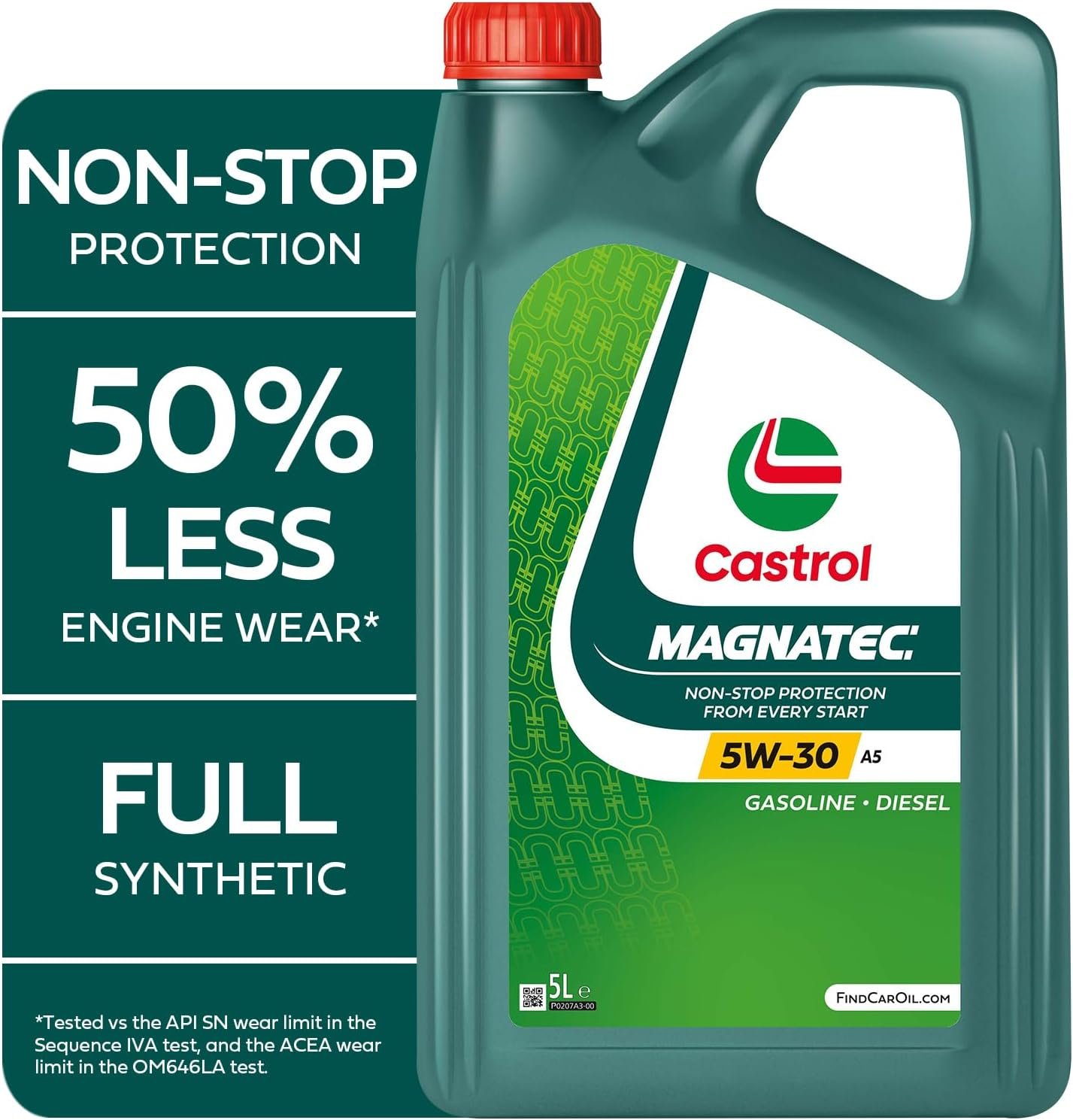
As an Amazon Associate, we may earn from qualifying purchases. This doesn't affect our recommendations — we only suggest oils that hold the exact OEM approval for your engine.
Best Engine Oil for Ford Focus Mk3 2.0 TDCi (150/185 HP)
The third-generation Ford Focus (2011-2018) fitted with the 2.0 TDCi engine remains one of the most capable diesel family cars of its era. The TXDB and UFDB engine codes identify a 1,997cc four-cylinder common-rail turbodiesel producing either 150 or 185 HP, paired with a DPF and EGR system that demand careful oil selection. Ford’s 2.0 TDCi rewards correct maintenance with excellent longevity, but punishes neglect through a well-documented failure chain: leaking injector seals allow carbon ingress, which damages the turbo, which fills the sump with debris. Breaking that chain starts with the right oil.
Quick Answer: Recommended Oil
For Ford Focus Mk3 2.0 TDCi (150/185 HP):
- Recommended viscosity: SAE 5W-30
- Oil capacity: 5.7 litres with filter (5.3 L without)
- Required norms: ACEA C2, Ford WSS-M2C913-D
Key point: WSS-M2C913-D is Ford’s diesel oil specification mandating low-SAPS chemistry to protect the DPF from ash accumulation. Standard 5W-30 oils without this approval produce higher sulphated ash levels that permanently clog the particulate filter. Always verify WSS-M2C913-D on the bottle before purchasing.
The 2.0 TDCi Engine: Ford’s Duratorq Workhorse
The 2.0 TDCi in the Focus Mk3 belongs to Ford’s Duratorq family. It uses a Delphi common-rail injection system operating at pressures up to 1,800 bar for precise fuel metering and reduced noise. The 150 HP variant (TXDB) and 185 HP variant (UFDB) share the same block and head, with differences in turbo calibration and ECU mapping accounting for the power gap. Both use a variable geometry turbocharger delivering peak torque of 370 Nm or 400 Nm from around 2,000 RPM.
The Mk3’s 2.0 TDCi represented a meaningful improvement over the Mk2’s version. Ford redesigned the injector copper seals and revised the oil sump baffle layout, addressing two persistent weaknesses of the earlier unit. However, the fundamental architecture retains characteristics that make oil quality critical to long-term reliability.
Understanding Ford WSS-M2C913-D
Ford’s WSS-M2C913-D specification mandates low-SAPS (Sulphated Ash, Phosphorus, Sulphur) additive chemistry that minimises metallic ash residue from oil combustion. This ash cannot be regenerated out of the DPF and accumulates permanently, reducing filter capacity over time.
WSS-M2C913-D adds requirements around oxidation stability and high-temperature deposit control beyond what the generic ACEA C2 standard mandates. Any oil carrying WSS-M2C913-D will meet ACEA C2, but the reverse is not true. Always look for the Ford-specific approval. A prematurely blocked DPF costs £1,000-1,800 to replace, and ash loading from incorrect oil is a leading cause of premature failure.
Technical Specifications: 2.0 TDCi (TXDB / UFDB)
| Specification | Value |
|---|---|
| Displacement | 1,997cc (2.0 litres) |
| Layout | Inline-4, transverse, cast iron block, aluminium head |
| Valvetrain | DOHC, 16 valves, timing belt |
| Compression Ratio | 15.5:1 |
| Power | 150 HP (TXDB) / 185 HP (UFDB) @ 3,500 RPM |
| Torque | 370 Nm (TXDB) / 400 Nm (UFDB) @ 2,000 RPM |
| Fuel System | Delphi common-rail direct injection, up to 1,800 bar |
| Turbocharger | Variable geometry (VGT) |
| Recommended Viscosity | SAE 5W-30 |
| Oil Capacity (without filter) | 5.3 litres |
| Oil Capacity (with filter) | 5.7 litres |
| ACEA Norm | C2 |
| Ford Norm | WSS-M2C913-D |
Oil Change Intervals
Ford Official Recommendation:
- Standard service: 12,500 miles or 12 months (whichever comes first)
- Flexible service: up to 18,000 miles or 24 months on some models
Recommended Practice: 10,000 miles or annually, whichever comes first.
DPF regeneration cycles inject additional fuel into the combustion chamber, some of which reaches the sump and dilutes the oil. This fuel dilution accelerates viscosity breakdown, particularly on engines that rarely complete a full regeneration cycle.
Consider 7,500-mile intervals if:
- Predominantly urban stop-start driving
- Regular short trips under 15 miles
- Vehicle exceeds 100,000 miles
- Oil level rises on the dipstick between services (fuel dilution indicator)
Common 2.0 TDCi Problems Related to Oil
The Injector Seal to Turbo Failure Chain
The most serious concern is a well-documented failure progression starting with leaking injector seals. While the Mk3 uses improved copper seals compared to the Mk2’s troublesome design, they still degrade over time. A failed seal allows combustion gases past the injector into the cylinder head, creating carbon deposits around the injector bore. These deposits affect injector seating and spray pattern, causing rough running and increased soot production. The excess soot overwhelms the DPF, while carbon particles score the turbo’s variable geometry vanes, causing them to stick. In severe cases, turbo bearing failure follows, sending metallic debris into the sump.
Critical maintenance point: When replacing a failed turbo on the 2.0 TDCi, the oil sump must be thoroughly cleaned or replaced. Metallic debris from the turbo bearings settles in the sump and will be pumped through the new turbo if left in place, causing immediate repeat failure. Any reputable specialist will insist on this step. If a garage quotes turbo replacement without sump cleaning, find another garage.
DPF Clogging on Urban Use
The DPF requires sustained driving at motorway speeds, typically 15-20 minutes above 2,500 RPM, to reach passive regeneration temperatures. Urban-only drivers face repeated failed active regeneration attempts, progressively blocking the filter. Symptoms include the DPF warning light, reduced power, and eventually limp mode. A 30-minute motorway run weekly prevents most issues. During failed active regeneration, late post-injection fuel pulses wash past the piston rings into the sump, diluting the oil and raising the dipstick level. This diluted oil loses viscosity and protective capability. If you notice rising oil levels, the engine needs a sustained highway drive followed by an oil change.
Why Correct Oil Matters for the 2.0 TDCi
The turbocharger spins at up to 200,000 RPM on oil-fed bearings. After shutdown following sustained driving, residual heat soaks through the turbo centre housing while oil flow has stopped. Degraded oil cokes inside the housing, forming hard carbon deposits that restrict oil flow and score the shaft. Quality synthetic oil resists coking far better than mineral or semi-synthetic alternatives. The variable geometry vanes also benefit from low-SAPS oil, which produces less combustion ash and reduces the carbon deposits that cause vane sticking.
Conclusion
The Ford Focus Mk3 2.0 TDCi requires SAE 5W-30 engine oil meeting ACEA C2 and Ford WSS-M2C913-D, with a capacity of 5.7 litres including the filter. Ford Castrol Magnatec Professional A5 5W-30 is the safest OEM choice at £35-42 for 5 litres. Change oil at 10,000-mile intervals or annually, shortening to 7,500 miles for urban driving. The 2.0 TDCi rewards disciplined maintenance: correct oil, regular motorway runs for DPF health, and prompt attention to injector seal degradation before the failure chain reaches the turbo. The cost of correct oil is negligible compared to a turbo replacement at £800-1,400 or a DPF at £1,000-1,800.
Our Top Picks
As an Amazon Associate, we may earn from qualifying purchases. This doesn't affect our recommendations — we only suggest oils that hold the exact OEM approval for your engine.