 Oil-
Oil-
As an Amazon Associate, we may earn from qualifying purchases. This doesn't affect our recommendations — we only suggest oils that hold the exact OEM approval for your engine.
Best Engine Oil for Renault Twingo 1 1.2 (58/60 HP)
The Renault Twingo 1st generation, produced from 1993 to 2007, remains one of the most recognisable city cars ever sold in Europe. Powered by the D7F 1.2-litre petrol engine producing 58 or 60 HP, the original Twingo was designed as an affordable, cheerful urban runabout — and millions found their way onto European roads over a fourteen-year production run. The D7F is a mechanically simple, naturally aspirated unit with no turbocharger or direct injection to complicate matters. That simplicity is its greatest strength, but it does not mean oil choice is unimportant. Correct oil keeps the timing belt tensioner operating properly, limits piston ring wear that causes oil consumption, and protects ageing valve train components. This guide covers everything you need to know about choosing the right engine oil for your Twingo 1 1.2.
Quick Answer: Recommended Oil
For Twingo 1 1.2 (58/60 HP) D7F:
- Specification: Renault RN0700 with ACEA A3/B4
- Viscosity: SAE 5W-40 (alternative: 10W-40 in warmer climates)
- Oil capacity: 3.6 litres with filter (3.4 L without)
Key point: The D7F engine is tolerant and forgiving, but using oil that meets at least ACEA A3/B4 ensures adequate wear protection and thermal stability. Oils carrying the Renault RN0700 approval are preferred, as this is the Renault norm developed specifically for older naturally aspirated petrol engines.
The D7F Engine
The D7F is one of Renault’s simplest and longest-serving engines. Displacing 1,149cc through four cylinders in an inline layout, it features a single overhead camshaft (SOHC) driving eight valves — two per cylinder. There is no variable valve timing, no turbocharger, and no direct injection. Fuel is delivered through multipoint injection, and the engine breathes through a conventional intake manifold. Peak power is 58 or 60 HP depending on the specific variant and model year, with maximum torque of approximately 93 Nm arriving at around 2,800 RPM.
The engine block is cast iron with an aluminium cylinder head, a durable combination that handles thermal cycling well. The compression ratio of 9.5:1 is moderate, meaning the engine runs comfortably on standard 95 RON fuel without detonation concerns. Internally, the crankshaft rides in five main bearings, and the connecting rods are forged steel — overbuilt for the modest power output, which contributes to the D7F’s well-earned reputation for longevity.
Timing belt is the critical maintenance item. The D7F is an interference engine, meaning a snapped belt causes pistons to strike valves, destroying the cylinder head and often the pistons themselves. Renault specifies replacement every 60,000 km or 5 years, whichever comes first. This is not a service to delay — belt replacement costs approximately £200-300, while a damaged head costs £800 or more. When changing the belt, always replace the water pump and tensioner simultaneously.
Valve clearance on the D7F requires periodic manual adjustment, as the engine uses mechanical tappets rather than hydraulic lifters. Renault recommends checking and adjusting valve clearances every 100,000 km. Cylinder 4, being furthest from the water pump, runs hottest and tends to tighten first. Tight exhaust valves lose their ability to transfer heat to the seat, leading to valve burning. A valve adjustment takes an experienced mechanic roughly an hour and costs very little — neglecting it can result in burnt valves and a head rebuild.
Understanding the Oil Specifications
Renault RN0700
RN0700 is Renault’s oil approval norm for older naturally aspirated petrol engines without diesel particulate filters. It requires oils that provide strong wear protection, good detergency, and resistance to oxidation under moderate operating temperatures. The norm maps broadly onto ACEA A3/B4 performance levels but includes Renault-specific testing for sludge resistance and valve train wear.
For the D7F engine, RN0700 is the correct and only required Renault norm. Newer Renault specifications like RN0710 or RN0720 are designed for more modern engines with emissions equipment — they are unnecessary for the Twingo 1 and offer no benefit.
ACEA A3/B4
The European Automobile Manufacturers’ Association (ACEA) A3/B4 standard defines a high-performance oil suitable for both petrol and diesel engines. Key characteristics include stable stay-in-grade viscosity, strong high-temperature/high-shear (HTHS) performance above 3.5 mPa.s, and robust anti-wear properties. For the D7F, ACEA A3/B4 ensures that oil maintains adequate film thickness even when hot, protecting the plain bearings and cam followers from wear.
If you cannot find oil with the RN0700 approval specifically printed on the label, any reputable fully synthetic or semi-synthetic 5W-40 meeting ACEA A3/B4 will serve the D7F perfectly well.
Viscosity: 5W-40 vs 10W-40
SAE 5W-40 is the primary recommendation. The “5W” cold rating ensures the oil flows freely at startup temperatures down to approximately -30 degrees C, reducing dry-start wear during cold mornings. The “40” hot rating provides adequate film thickness at operating temperature.
SAE 10W-40 is an acceptable alternative, particularly in warmer climates where winter temperatures rarely drop below -10 degrees C. It is also a sensible choice for higher-mileage D7F engines above 150,000 km, where the slightly thicker cold viscosity can help reduce oil consumption past worn piston rings. Semi-synthetic 10W-40 oils are widely available and cheaper than full synthetic 5W-40, making them a practical option for owners keeping maintenance costs low on an older vehicle.
Technical Specifications: 1.2 D7F
| Specification | Value |
|---|---|
| Displacement | 1,149cc (1.2 litres) |
| Layout | Inline-4, transverse, cast iron block, aluminium head |
| Valvetrain | SOHC, 8 valves, timing belt |
| Bore x Stroke | 69.0mm x 77.0mm |
| Compression Ratio | 9.5:1 |
| Power | 58/60 HP @ 5,250 RPM |
| Torque | 93 Nm @ 2,800 RPM |
| Fuel Type | Petrol, 95 RON |
| Aspiration | Naturally aspirated |
| Recommended Viscosity | SAE 5W-40 |
| Alternative Viscosity | SAE 10W-40 |
| Oil Capacity (without filter) | 3.4 litres |
| Oil Capacity (with filter) | 3.6 litres |
| ACEA Norm | A3/B4 |
| OEM Norm | Renault RN0700 |
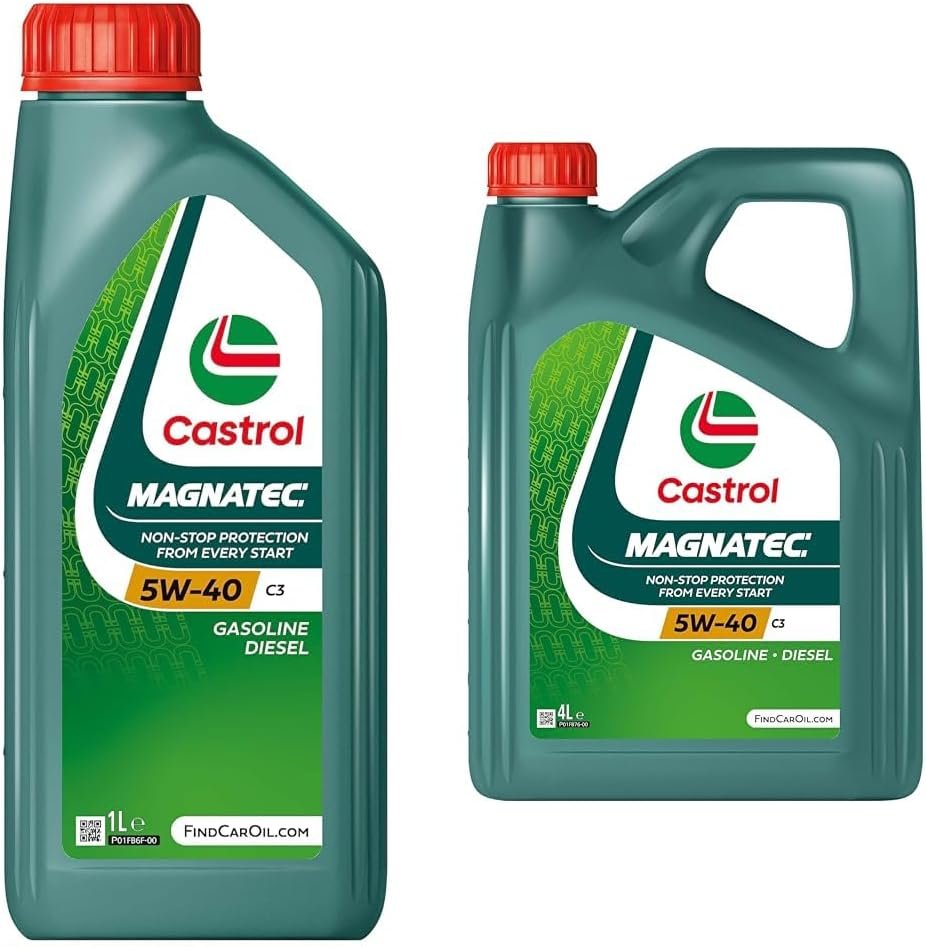
Best Value: Castrol Magnatec 5W-40 Castrol’s Magnatec range features “intelligent molecules” that cling to engine surfaces during shutdown, reducing dry-start wear — a genuine benefit for a city car that endures frequent cold starts on short trips. Meeting ACEA A3/B4, it delivers solid protection at a competitive price point of £28-32 for 5 litres. Widely available at UK motor factors and supermarkets.
Alternative: Total Quartz 9000 5W-40 Total (now TotalEnergies) is part of the same group as Elf, and the Quartz 9000 shares similar base oil technology. It carries the RN0700 approval and offers excellent oxidation resistance. A strong choice for owners who prefer a recognised brand with Renault approval at a competitive price of £25-30 for 5 litres.
Oil Change Intervals
Renault Official Recommendation:
- 15,000 km or 12 months (whichever comes first)
Recommended Practice: 10,000 km or 12 months for typical driving. 7,500 km for predominantly short urban trips.
The D7F’s lack of turbocharger means oil is not subjected to extreme heat cycling, and its simple design creates fewer demands on the lubricant than modern turbocharged engines. However, the Twingo 1 is overwhelmingly used as a city car — exactly the driving pattern that degrades oil fastest. Short trips mean the engine rarely reaches full operating temperature, allowing fuel and moisture to accumulate in the oil. This dilutes the additive package and accelerates acid formation.
For a Twingo used primarily for urban driving with trips under 10 km, 7,500 km or annual changes are wise. The total cost of an oil change using 4 litres of quality 5W-40 plus a filter is approximately £30-40 — a negligible expense that dramatically extends engine life.
Why Correct Oil Matters for the D7F
Oil Consumption Control: As D7F engines accumulate mileage beyond 100,000 km, piston ring wear allows increasing amounts of oil to pass into the combustion chamber. Quality oil with stable viscosity and good piston ring seal properties slows this progression. If your Twingo is consuming more than 0.5 litres per 5,000 km, switching from 5W-40 to 10W-40 may reduce consumption. Consumption beyond 1 litre per 5,000 km typically indicates piston ring replacement is needed — though given the Twingo’s modest value, many owners simply monitor the level and top up regularly.
Valve Train Protection: The D7F’s SOHC valve train with mechanical tappets relies entirely on oil film to prevent cam lobe and follower wear. Unlike hydraulic lifters that automatically compensate for clearance changes, the D7F’s solid tappets transmit full camshaft force through a thin oil film. Degraded oil with depleted anti-wear additives accelerates cam lobe pitting, particularly on the exhaust lobes which operate at higher temperatures.
Sludge Prevention: The D7F’s relatively small oil capacity of 3.6 litres means each litre of oil works harder than in engines with larger sumps. Oil degrades faster in smaller volumes because contaminants concentrate more quickly. Regular changes with ACEA A3/B4 oil — which has strong detergent and dispersant properties — prevent sludge buildup in the oil pickup screen and galleries, maintaining consistent oil pressure.
Common D7F Problems Related to Oil
Rising Oil Consumption: The most common age-related issue. Piston ring wear causes blue smoke on acceleration and a gradually dropping oil level. Using 5W-40 or 10W-40 rather than thinner grades helps manage this. Check the dipstick weekly on high-mileage engines and carry a spare litre in the boot.
Cam Lobe Wear: Neglected oil changes combined with skipped valve adjustments accelerate cam lobe wear. Symptoms include a ticking noise that does not improve when the engine warms up, rough idle, and gradually decreasing power. Replacement requires removing the cylinder head — at which point a complete engine replacement from a breaker is often more economical (D7F engines are plentiful and inexpensive).
Oil Leaks: The D7F commonly develops leaks from the rocker cover gasket, crankshaft front seal, and sump gasket as rubber components age. These are inexpensive to repair and should be addressed promptly — a slow leak that drops the oil level by half a litre between checks can cause bearing damage during spirited driving or hot weather when oil thins further.
Timing Belt Tensioner: The hydraulic belt tensioner relies on oil pressure to maintain correct belt tension. Degraded oil with poor viscosity stability can cause tensioner fluctuation, leading to belt slip or accelerated wear. Given the D7F is an interference engine, any sign of belt noise warrants immediate inspection.
Conclusion
The Renault Twingo 1 1.2 with the D7F engine requires SAE 5W-40 engine oil meeting ACEA A3/B4 and ideally carrying the Renault RN0700 approval, with a capacity of 3.6 litres including the filter. Elf Evolution 900 SXR 5W-40 is the natural first choice as Renault’s own recommendation, with Mobil Super 3000 X1, Castrol Magnatec, and Total Quartz 9000 all providing excellent alternatives at £25-35 for 5 litres.
Change the oil every 10,000 km or annually — more frequently for purely urban use. The modest cost of £30-40 per service protects against oil consumption, cam lobe wear, and sludge buildup that can turn a cheap-to-run city car into an uneconomical repair project. Keep on top of the timing belt (every 60,000 km or 5 years) and valve clearances (every 100,000 km), monitor the oil level fortnightly, and the D7F will reward you with reliable, economical service well beyond 200,000 km. Few engines are as forgiving or as cheap to maintain — respect the basics and the Twingo’s little four-cylinder will outlast far more complex machinery.
Our Top Picks
As an Amazon Associate, we may earn from qualifying purchases. This doesn't affect our recommendations — we only suggest oils that hold the exact OEM approval for your engine.