 Oil-
Oil-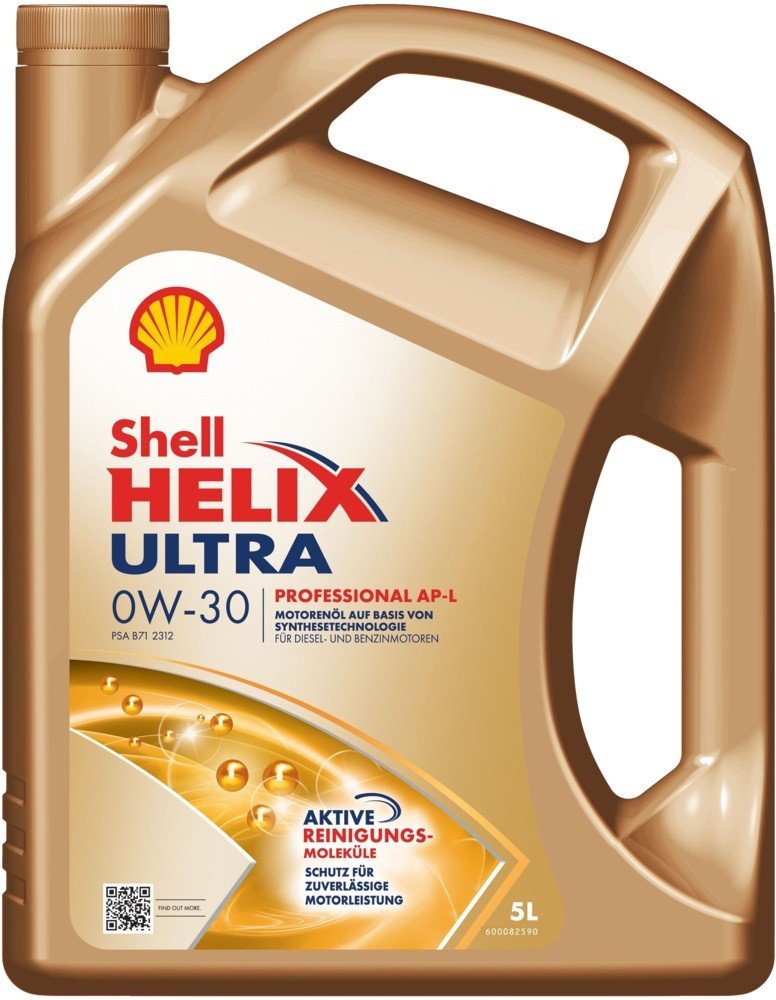
As an Amazon Associate, we may earn from qualifying purchases. This doesn't affect our recommendations — we only suggest oils that hold the exact OEM approval for your engine.
Best Engine Oil for Vauxhall Mokka 1.2 PureTech Turbo (130 HP)
The second-generation Vauxhall Mokka, launched in 2020 on the Stellantis CMP platform, brought sharp styling and a compact SUV footprint to a powertrain borrowed wholesale from PSA. Its most popular petrol option is the 1.2 PureTech turbocharged three-cylinder producing 130 HP, the same engine found in the Peugeot 208, Citroen C3, and Vauxhall’s own Corsa F. It is a capable engine for a small SUV, but it carries a design feature that makes oil selection a matter of engine survival rather than routine maintenance: a wet timing belt submerged in engine oil. Mokka owners face the same belt failure risk that has generated recalls, consumer complaints, and a Stellantis compensation programme across the entire PureTech range. This guide explains what the Mokka specifically demands and why PSA B71 2312 approval is non-negotiable.
Quick Answer: Recommended Oil
For Vauxhall Mokka 2nd Gen 1.2 PureTech Turbo (130 HP):
- Recommended viscosity: SAE 0W-30
- Oil capacity: 3.5 litres with filter (3.2 L without)
- Required norms: ACEA C2, PSA B71 2312
Critical warning: Only use oil with explicit PSA B71 2312 approval printed on the label. This specification is mandatory for the wet timing belt. A generic 0W-30 or any ACEA C3 product will accelerate belt degradation and can cause catastrophic engine failure.
The EB2ADTS Engine in the Mokka
The EB2ADTS is a 1,199cc inline three-cylinder with an aluminium block and head, dual overhead cams, 12 valves, direct fuel injection, and a twin-scroll turbocharger. It produces 130 HP at 5,500 RPM and 230 Nm of torque from 1,750 RPM. In the Mokka, it pairs with either a six-speed manual or an eight-speed automatic, driving the front wheels through the CMP platform’s transverse layout.
The Mokka is roughly 150 kg heavier than the Corsa F that shares this engine, and that weight difference matters. An SUV body, higher ride height, and larger frontal area mean the 1.2 PureTech works harder in the Mokka than in lighter hatchbacks. Motorway cruising, fully loaded family trips, and towing light loads all place sustained demand on the turbocharger and oil system. The engine copes well mechanically, but the additional thermal load makes oil quality even more consequential.
The Wet Timing Belt: Why the Mokka Inherits a Known Problem
The PureTech 1.2 uses a toothed rubber timing belt running inside the engine block, permanently immersed in the sump oil. PSA designed this to eliminate conventional belt service intervals, reduce noise, and extend belt life through oil cooling and lubrication. In laboratory conditions, the concept is sound. In real-world British driving, particularly the short urban trips that define many Mokka owners’ routines, the belt has proven to be the engine’s critical vulnerability.
The failure sequence is well-documented across the PureTech range. Direct injection causes fuel dilution of the sump oil during cold starts and short journeys. Unburned petrol washes past the piston rings and accumulates, altering the oil’s chemistry. This fuel-contaminated oil attacks the belt rubber, causing it to swell, soften, and shed particles. These rubber fragments clog the oil pump pickup strainer at the bottom of the sump. Oil flow to the bearings collapses, and the engine seizes. Belt failures have been recorded as early as 40,000 km on the worst-affected PureTech engines.
The Mokka ownership pattern amplifies the risk. Many Mokka buyers are families who chose a compact SUV for school runs, supermarket trips, and short urban errands. These are precisely the driving conditions that maximise fuel dilution. The engine rarely reaches full operating temperature, fuel accumulates in the sump faster than it can evaporate, and the belt soaks in degraded oil mile after mile.
The 2021 Recall and Stellantis Compensation
PSA issued a recall in 2021 covering approximately 500,000 PureTech-equipped vehicles across Europe. The recall involved inspection of the timing belt and oil pump strainer, with replacement where degradation was found. Vauxhall Mokka models built from 2020 onward use a later-production PureTech with some belt material revisions and an improved strainer design, but the fundamental wet belt architecture remains unchanged.
In May 2025, Stellantis announced a broader compensation programme acknowledging wet belt failures as a systemic design issue. The programme covers engines across the Peugeot, Citroen, DS, Vauxhall, and Opel ranges. UK Mokka owners should contact their Vauxhall dealer for current eligibility details. Many independent technicians now recommend a precautionary belt replacement at 60,000 to 70,000 miles regardless of apparent condition, at a cost of roughly £400-600, far less than the £3,000-5,000 for an engine replacement after a belt failure.
Piston Ring Oil Consumption
The wet belt is not the only concern. Some PureTech engines suffer elevated oil consumption traced to the piston ring design. Small drainage holes in the oil scraper rings are prone to carbon buildup from direct injection byproducts. As these holes clog, oil passes the rings into the combustion chamber and burns off. Consumption rates of 0.5 to 1.0 litres per 1,000 miles have been reported on affected units.
On a sump holding only 3.5 litres, losing even half a litre represents a significant proportion of total volume. If the level drops far enough, the wet timing belt is partially exposed to air, losing the cooling and lubrication the design depends upon. The combination of fuel dilution degrading oil quality and consumption reducing oil volume creates a compounding failure loop. Check the dipstick fortnightly. This is not optional on a PureTech engine.
Why PSA B71 2312 Is Mandatory
PSA B71 2312 is a manufacturer-specific norm developed with the wet timing belt explicitly in mind. It mandates a low-SAPS (Sulphated Ash, Phosphorus, Sulphur) additive package that protects metal surfaces while remaining chemically compatible with the belt rubber. Higher-SAPS oils, including many ACEA C3 products, contain metallic detergent compounds that attack the belt material, promoting deposits and altering rubber elasticity until the belt cracks and sheds.
ACEA C2 alone is not sufficient. PSA B71 2312 adds belt-specific chemistry requirements beyond the ACEA standard. An oil meeting C2 but lacking PSA B71 2312 has not been validated against the PureTech belt compound. Always confirm the PSA norm on the label.
Technical Specifications: 1.2 PureTech Turbo (EB2ADTS)
| Specification | Value |
|---|---|
| Displacement | 1,199cc (1.2 litres) |
| Layout | Inline-3, transverse, aluminium block and head |
| Valvetrain | DOHC, 12 valves, wet timing belt |
| Turbocharger | Twin-scroll |
| Power | 130 HP @ 5,500 RPM |
| Torque | 230 Nm @ 1,750 RPM |
| Fuel Type | Petrol, 95 RON minimum |
| Recommended Viscosity | SAE 0W-30 |
| Oil Capacity (without filter) | 3.2 litres |
| Oil Capacity (with filter) | 3.5 litres |
| ACEA Norm | C2 |
| OEM Norm | PSA B71 2312 |
Oil Change Intervals
Vauxhall Official Recommendation:
- Variable service indicator, up to 20,000 miles or 24 months
Recommended Practice: 10,000 miles or 12 months, whichever comes first.
The factory interval is dangerously long for a wet belt engine in typical UK conditions. Fuel dilution degrades the oil progressively, and by 20,000 miles the lubricant has lost significant protective capacity while the belt has been soaking in it the entire time.
Shorten to 6,000-8,000 miles if:
- Most journeys are short urban trips under 10 miles
- The dipstick shows oil level rising above maximum (fuel accumulation)
- Oil consumption exceeds 0.5 litres per 1,000 miles
- The vehicle has covered more than 40,000 miles
- Previous service history is unknown or shows non-approved oil
- The Mokka is used primarily for school runs and errands without regular motorway driving
Drive it warm regularly. A 30-minute motorway run at full operating temperature helps evaporate accumulated fuel from the sump. Mokka owners whose cars rarely leave the suburbs should treat shortened intervals as essential, not cautious.
Conclusion
The Vauxhall Mokka 1.2 PureTech Turbo requires SAE 0W-30 engine oil meeting ACEA C2 and PSA B71 2312, with a capacity of 3.5 litres including the filter. The wet timing belt makes this one of the most oil-sensitive engines fitted to any current UK SUV. Incorrect oil, extended intervals, or a neglected dipstick create the conditions for sudden engine failure at mileages that would be unremarkable on any other modern car.
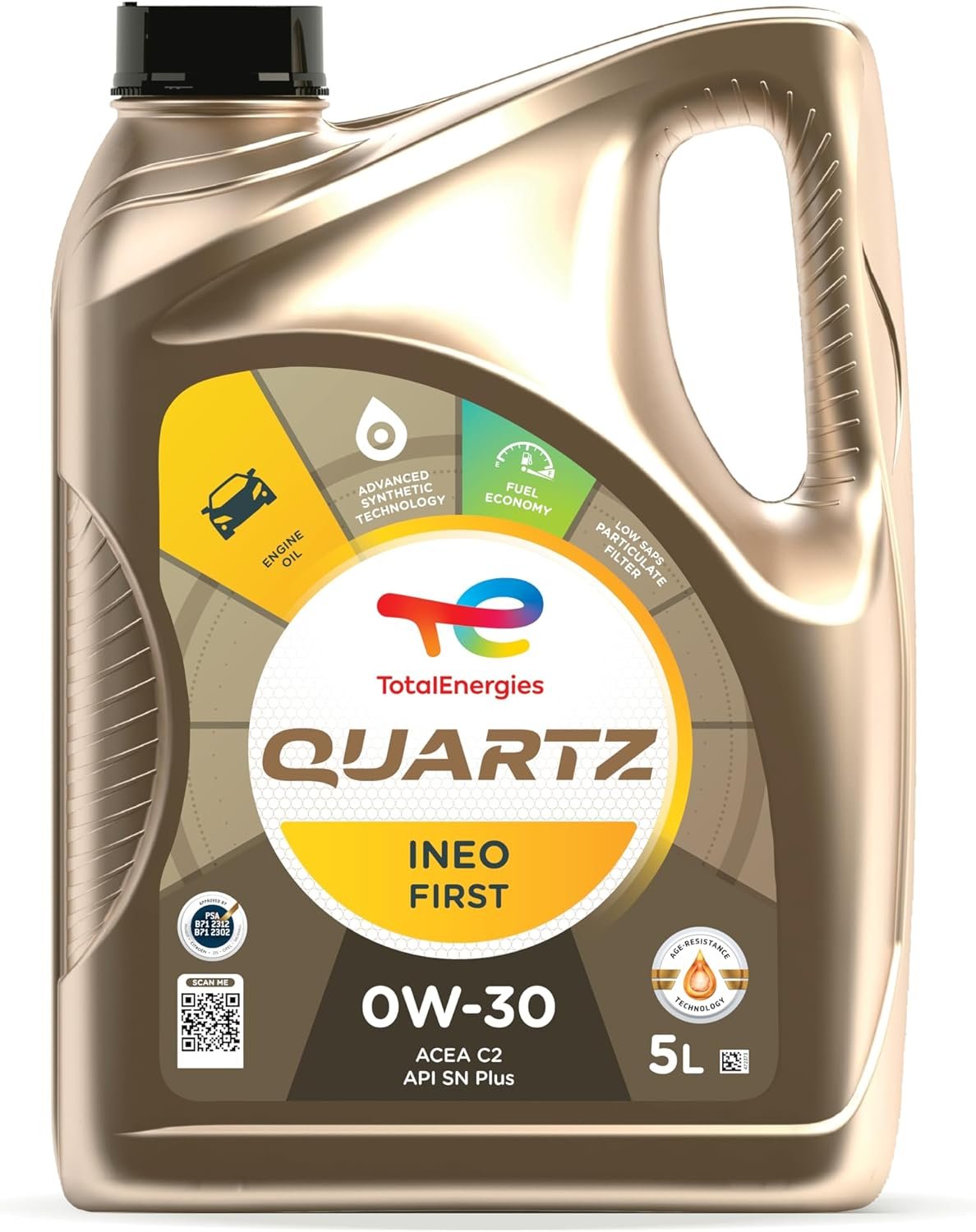
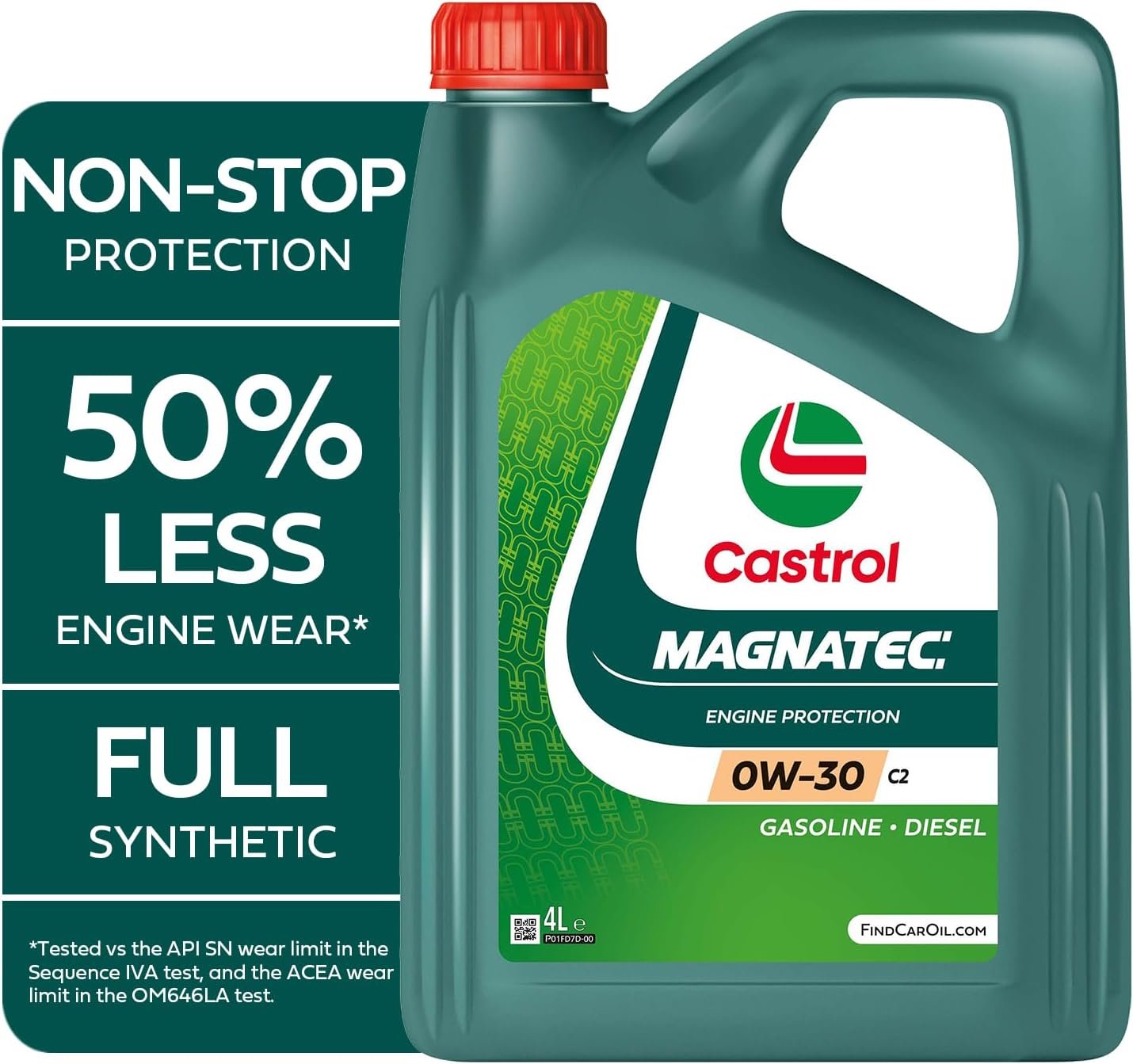
Total Quartz INEO First 0W-30 is the natural first choice at £34-39 for 5 litres, backed by Stellantis’s factory-fill authority. Mobil 1 ESP 0W-30, Shell Helix Ultra Professional AP 0W-30, and Castrol EDGE 0W-30 all provide approved alternatives. Confirm PSA B71 2312 on the label, change the oil at sensible intervals, check the dipstick fortnightly, and budget for a precautionary belt replacement around 60,000-70,000 miles. The PureTech rewards attentive ownership with willing performance and good economy. It does not forgive neglect.
Our Top Picks
As an Amazon Associate, we may earn from qualifying purchases. This doesn't affect our recommendations — we only suggest oils that hold the exact OEM approval for your engine.