 Oil-
Oil-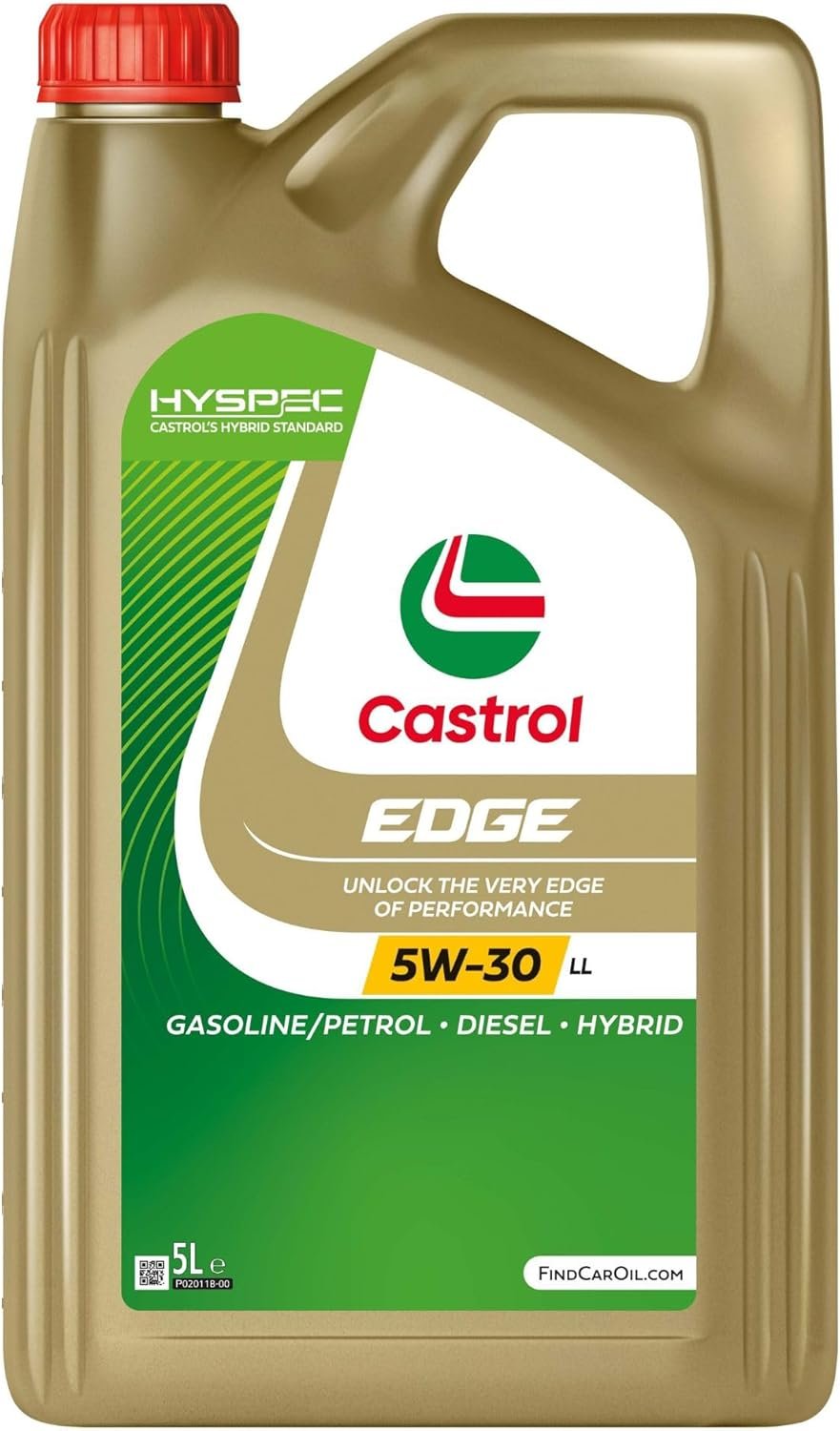
As an Amazon Associate, we may earn from qualifying purchases. This doesn't affect our recommendations — we only suggest oils that hold the exact OEM approval for your engine.
Best Engine Oil for Volkswagen Golf 5 1.9 TDI (90/105 HP)
The Volkswagen Golf 5 1.9 TDI is arguably the most legendary diesel hatchback ever produced. Built between 2003 and 2008, powered by the final evolution of Volkswagen’s iconic 1.9-litre diesel family, it combined extraordinary fuel economy with mechanical simplicity and a reputation for durability that few modern engines can match. The 1.9 TDI in Golf 5 form came with three engine codes — BKC (105 HP, Pumpe Düse), BXE (105 HP, Pumpe Düse), and BLS (105 HP, common rail) — representing the transition from unit injector technology to the common-rail system that would dominate diesel engineering. Nearly two decades after production, many Golf 5 1.9 TDIs are still running well past 200,000 miles. Keeping them there requires correct oil specification, and VW 507 00 is the standard these engines were designed around.
Quick Answer: Recommended Oil
For VW Golf 5 1.9 TDI (90/105 HP), engine codes BXE / BKC / BLS:
- Recommended viscosity: SAE 5W-30
- Oil capacity: 4.3 litres with filter (4.0 L without)
- Required norms: ACEA C3, VW 507 00
Important note on Pumpe Düse engines: The BKC and BXE engine codes use Pumpe Düse (PD) unit injector technology. These engines were originally designed for VW 505 01, a specification that allowed higher SAPS content. When VW introduced the DPF on later production Golf 5 models, VW 507 00 became the mandatory specification. If your Golf 5 has a DPF (most UK models from 2006 onwards), VW 507 00 is required. For pre-DPF cars, VW 507 00 is still fully compatible and provides the best available protection. There is no downside to using it.
Pumpe Düse vs Common Rail: Two Technologies, One Engine
The Golf 5 1.9 TDI spans a pivotal moment in diesel technology. Understanding which system your engine uses explains its characteristics and maintenance needs.
Pumpe Düse (PD) — BKC and BXE (2003-2008): Pumpe Düse, known in English as Unit Injector or Pump Injector, integrates the high-pressure fuel pump directly into each injector. Each cylinder has its own self-contained pump-injector unit driven by an additional lobe on the camshaft. This design can generate injection pressures exceeding 2,000 bar — higher than many contemporary common-rail systems — producing excellent atomisation and very efficient combustion.
The PD system’s mechanical directness gives it a distinctive character. The injectors produce a characteristic diesel clatter that is louder than common-rail equivalents but entirely normal. The high injection pressures mean the engine is mechanically stressed in ways that demand strong anti-wear properties from the oil. The camshaft lobes that drive the PD injectors experience enormous contact pressures, and inadequate oil film strength at these contact points accelerates cam lobe wear — one of the 1.9 TDI’s documented failure modes.
Common Rail — BLS (2006-2008): The BLS engine code identifies the common-rail variant, used in later Golf 5 production and transitioning into the Golf 6. A single high-pressure pump supplies fuel to a common rail manifold, from which electronically controlled injectors draw fuel as needed. This system is quieter, smoother, and allows multiple injection events per combustion cycle for reduced emissions and noise.
The BLS runs at slightly lower injection pressures than the PD variants but compensates with more precise injection timing and multiple pilot injections before the main combustion event. It is the more refined engine of the two but shares the same block, head, and oil system architecture.
Camshaft and Tappet Wear: The 1.9 TDI’s Known Weakness
On Pumpe Düse variants (BKC/BXE), the camshaft drives the high-pressure injector pumps through dedicated lobes. Each injection event subjects these cam lobes and their corresponding roller tappets to extreme mechanical loads. Over time, the cam lobes can wear, losing their profile and reducing injection pressure. Symptoms include increased engine noise, rough running, reduced power, and eventually failure to start.
Oil quality is the primary defence against camshaft wear. VW 507 00-approved oils contain anti-wear additive packages (primarily ZDDP — zinc dialkyldithiophosphate) that maintain a protective film on the cam lobe surfaces under extreme pressure. Critically, the ZDDP concentration must be balanced against the low-SAPS requirements for DPF protection. VW 507 00 achieves this balance. Generic oils that meet ACEA C3 may have different ZDDP levels that are either too low for adequate cam protection or too high for DPF compatibility.
Change intervals matter enormously for cam protection. As oil ages, its anti-wear additives deplete. Extended drain intervals on a PD engine allow metal-to-metal contact at the cam lobes during the last few thousand miles before an oil change. Fixed-interval servicing at 10,000 miles is strongly recommended for any PD-equipped Golf 5, regardless of what the service indicator suggests.
The Legendary Durability
The 1.9 TDI’s reputation for longevity is earned rather than mythical. Several design features contribute:
Cast iron block: Unlike the aluminium blocks used in newer diesel engines, the 1.9 TDI’s grey cast iron block provides exceptional rigidity under high cylinder pressures and outstanding resistance to bore wear. It adds weight but contributes to the engine’s ability to sustain 300,000+ miles without significant internal wear.
Simple turbocharger: The variable-geometry turbo is a well-proven unit without the electronic complexity of later designs. It responds to exhaust gas pressure through a vacuum-actuated wastegate, with fewer potential failure modes than electronically controlled turbos.
Robust bottom end: The forged steel crankshaft, steel connecting rods, and aluminium pistons are substantially overbuilt for the engine’s modest power output. The bottom end can comfortably handle the 250 Nm (BKC/BXE) or 240 Nm (BLS) of torque without bearing stress.
Fuel efficiency: Real-world economy of 55-65 mpg in mixed driving is routine. The engine’s efficiency means it runs at lower loads relative to its capacity in most driving situations, reducing thermal and mechanical stress.
None of these advantages survive poor oil. A Golf 5 1.9 TDI that has been serviced with the correct VW 507 00 oil at sensible intervals will outlast one maintained with incorrect specification by a substantial margin. At the mileages these engines commonly reach, the cumulative effect of oil quality becomes the difference between a quarter-million-mile survivor and a scrapped engine.
Timing Belt: The Critical Service Item
The 1.9 TDI uses a timing belt to drive the camshaft, and on PD variants, the belt also drives the camshaft that actuates the unit injectors. Belt failure on this interference engine is catastrophic — pistons will contact valves, bending them and potentially cracking the pistons.
VW’s recommended replacement interval is 80,000 miles or 5 years for the Golf 5 1.9 TDI, significantly shorter than the EA288 engines that followed. The belt, water pump, tensioner, and all rollers should be replaced as a set. Cost at an independent VW specialist is typically £250-400 for parts and labour.
On high-mileage cars approaching 200,000 miles, the belt may be on its second or third replacement. Always verify when the belt was last changed before buying a used Golf 5 TDI. If no documentation exists, replace it immediately regardless of apparent condition.
Technical Specifications: 1.9 TDI
| Specification | Value |
|---|---|
| Displacement | 1,896cc (1.9 litres) |
| Layout | Inline-4, transverse, cast iron block, aluminium head |
| Valvetrain | SOHC, 8 valves (BKC/BXE), DOHC 16v (BLS) |
| Timing System | Dry timing belt |
| Turbocharger | Variable-geometry (VNT) |
| Injection | Pumpe Düse unit injector (BKC/BXE) / Common rail (BLS) |
| Power | 90-105 HP @ 4,000 RPM |
| Torque | 240-250 Nm @ 1,900 RPM |
| Fuel Type | Diesel |
| Recommended Viscosity | SAE 5W-30 |
| Oil Capacity (without filter) | 4.0 litres |
| Oil Capacity (with filter) | 4.3 litres |
| ACEA Norm | C3 |
| VW Norm | VW 507 00 |
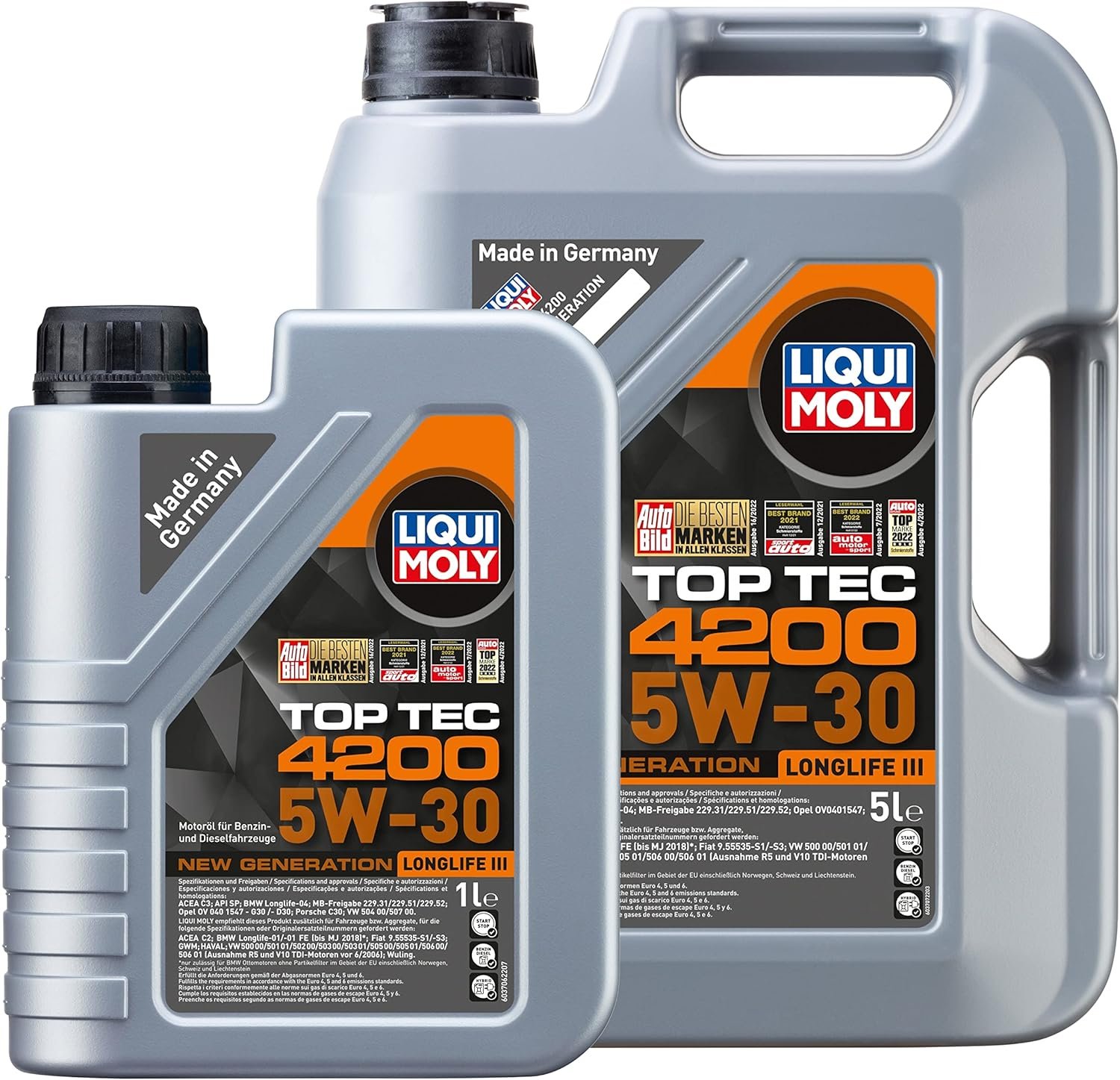
Best Value: Total Quartz INEO LongLife 5W-30 TotalEnergies’ fully synthetic VW-approved formula provides solid protection at a competitive price. Reliable performance across the 1.9 TDI’s operating range with adequate anti-wear properties for PD engines. Widely available through UK retailers and online. At £32-38 for 5 litres — the most affordable VW-approved option.
Oil Change Intervals
Volkswagen Official Recommendation:
- LongLife service: up to 18,600 miles (30,000 km) or 24 months
- Fixed service: 10,000 miles or 12 months
Recommended Practice: 10,000 miles or 12 months maximum. For PD engines with high mileage, consider 8,000 miles.
The Golf 5 1.9 TDI was designed for VW’s LongLife service regime, but at the mileages many of these engines have now reached, conservatism is warranted. Oil anti-wear additives deplete over time, and the PD injector cam lobes need continuous protection. The cost difference between annual and biennial oil changes is minimal compared to a camshaft replacement (£500-800 at an independent specialist).
Reduce to 7,000-8,000 miles if:
- The engine has covered more than 150,000 miles
- The car is used primarily for short urban trips
- The engine is a PD variant (BKC/BXE)
- Oil appears very dark or smells of diesel before the service indicator
- The car has been run on non-VW-approved oil in the past
Common 1.9 TDI Problems Related to Oil
Camshaft Wear (PD engines): The primary oil-related failure mode. Worn cam lobes lose their profile, reducing injector pump pressure and eventually causing complete injector failure. Prevention: correct VW 507 00 oil at shortened intervals.
Turbo Failure from Oil Coking: The VNT turbo runs at extreme temperatures. If oil quality degrades or the engine is switched off immediately after hard driving, oil residue in the turbo bearing housing cokes into hard carbon deposits. These restrict oil flow and accelerate bearing wear. Allow 30-60 seconds of idle time before switching off after motorway driving.
EGR Valve Fouling: Carbon deposits from recirculated exhaust gases accumulate on the EGR valve, causing rough idle and reduced power. While primarily an exhaust gas issue, oil vapour from the PCV system contributes to the carbon deposits. Quality oil with lower volatility reduces this contribution.
Dual-Mass Flywheel Failure: The DMF absorbs the 1.9 TDI’s characteristically strong combustion pulses. Worn DMFs rattle at idle and cause clutch judder. Replacement cost is £400-700 including clutch. Not oil-related, but a common expense on high-mileage cars.
Conclusion
The Volkswagen Golf 5 1.9 TDI requires SAE 5W-30 engine oil meeting ACEA C3 and VW 507 00, with a capacity of 4.3 litres including the filter. This is an engine with a deserved reputation for extraordinary longevity, but that longevity was never automatic — it was earned by owners who used the correct oil and changed it on time.
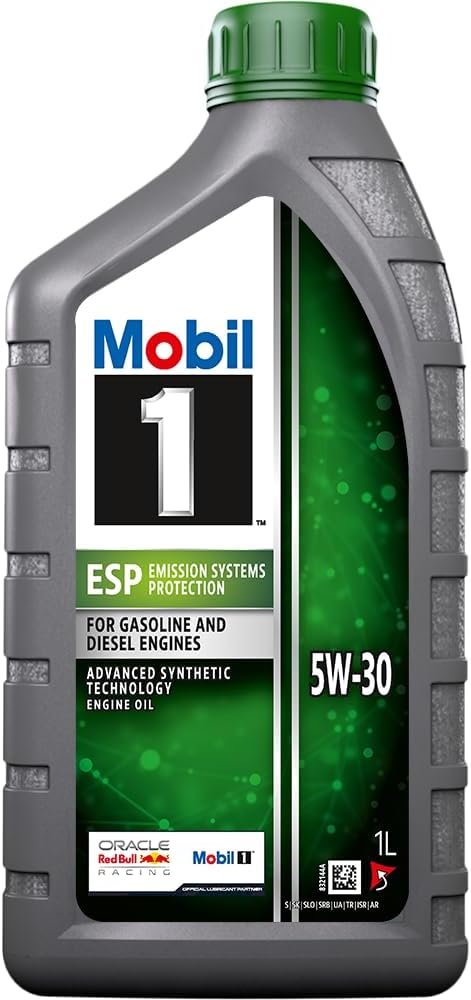
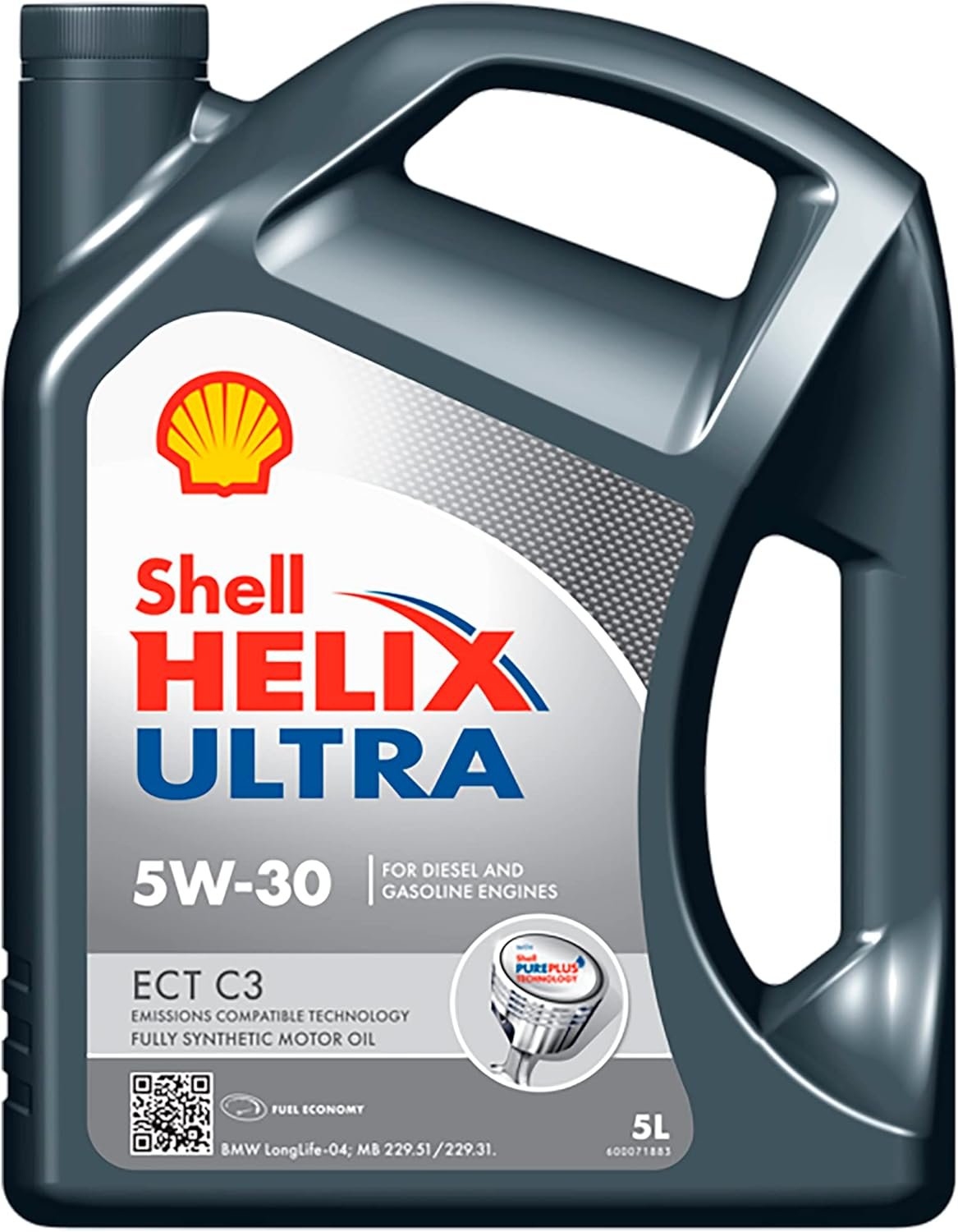
Castrol EDGE Professional LL III 5W-30 is the factory partner’s choice. Mobil 1 ESP Formula 5W-30, Shell Helix Ultra ECT C3 5W-30, and Total Quartz INEO LongLife 5W-30 are all VW 507 00-certified alternatives. For PD-engined cars, prioritise anti-wear performance and shorten change intervals at higher mileages. The 1.9 TDI asks for very little — correct oil, a timing belt on schedule, and the occasional motorway run to keep the turbo and DPF healthy. In return, it delivers the kind of reliable, economical service that modern engines can only aspire to.
Our Top Picks
As an Amazon Associate, we may earn from qualifying purchases. This doesn't affect our recommendations — we only suggest oils that hold the exact OEM approval for your engine.