 Oil-
Oil-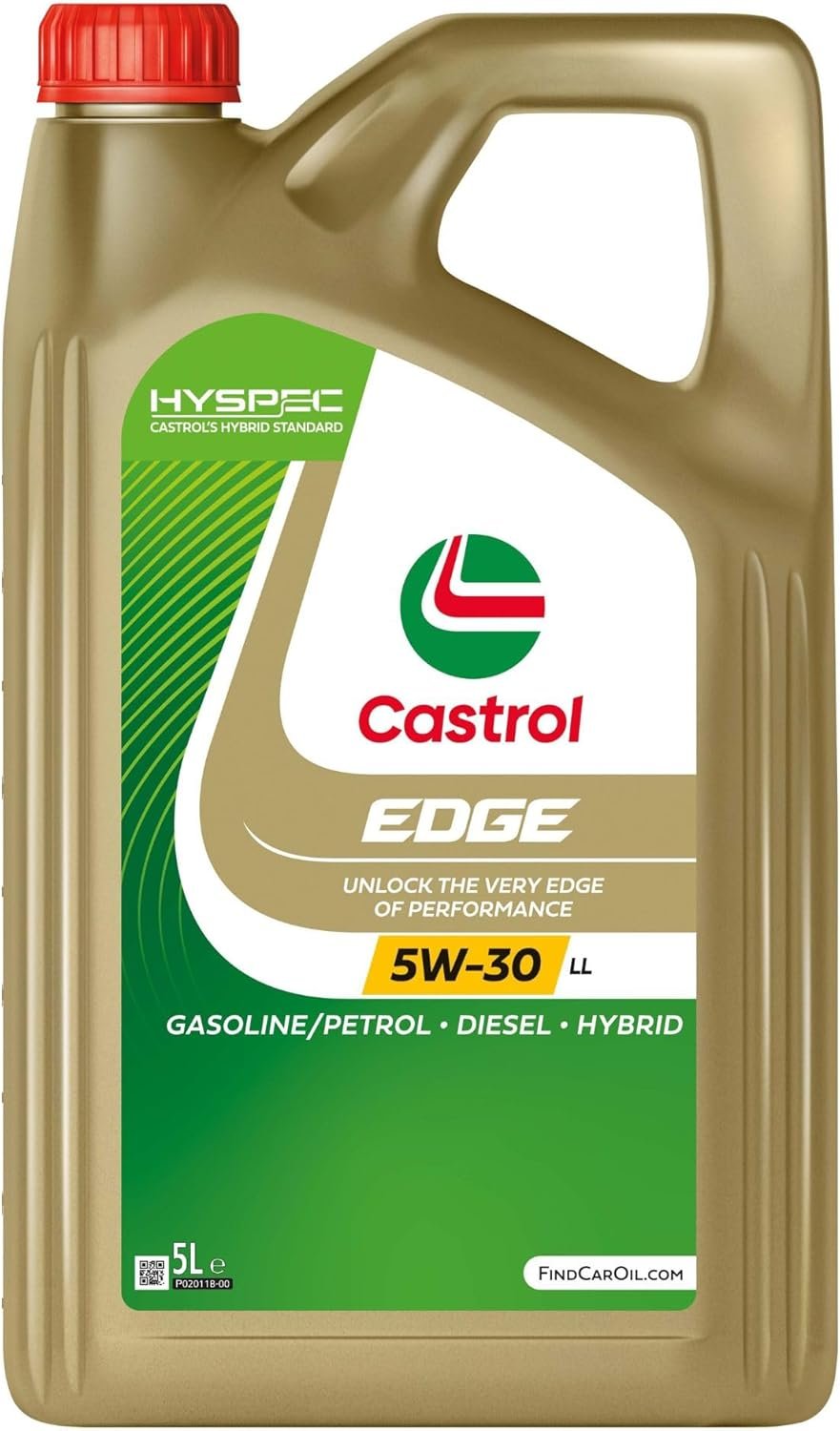
As an Amazon Associate, we may earn from qualifying purchases. This doesn't affect our recommendations — we only suggest oils that hold the exact OEM approval for your engine.
Best Engine Oil for VW Tiguan 2.0 TDI 150 HP (DFGA)
The second-generation Volkswagen Tiguan (AD), produced from 2016 onwards, is one of the best-selling SUVs in Europe. Its 2.0 TDI diesel engine with 150 HP is the volume seller in the UK, offering strong mid-range torque and reasonable fuel economy for a vehicle of this size. However, the Tiguan 2.0 TDI carries a serious and under-reported mechanical risk that every owner needs to understand: oil pump shaft wear. This single failure mode can destroy both the engine and the turbocharger in seconds, with no warning. Choosing the correct engine oil and maintaining strict service intervals is the minimum defence against this and several other costly problems. This guide covers the mandatory VW 507 00 specification, explains why the oil pump shaft issue makes lubrication quality a survival matter for this engine, and recommends four proven oils.
Quick Answer: Recommended Oil
For Tiguan 2nd Gen (AD) 2.0 TDI 150 HP (DFGA):
- Specification: VW 507 00 with ACEA C3
- Viscosity: SAE 5W-30 (alternative: 0W-30)
- Oil capacity: 4.7 litres with filter (4.4 L without)
Critical: Only use oil carrying the VW 507 00 approval. This is the diesel-specific specification mandating low-SAPS formulation to protect the DPF. Using a generic 5W-30 without VW 507 00 approval risks premature DPF saturation and accelerates the wear mechanisms that make this engine vulnerable. A DPF replacement costs £1,200-2,000 on the Tiguan.
The DFGA Engine: EA288 Family
The DFGA engine code identifies the 150 HP variant of Volkswagen’s EA288 diesel platform — the successor to the infamous EA189 that powered the previous-generation Golf 6 and Tiguan 1. The EA288 is a 1,968cc inline-4 with a cast-iron block, aluminium cylinder head, DOHC 16-valve layout, and a variable-geometry turbocharger. It produces 150 HP at 3,500-4,000 RPM and 340 Nm of torque from 1,750 RPM, giving the Tiguan comfortable overtaking ability despite its 1,600 kg kerb weight.
Compared to the older EA189, the EA288 features revised common-rail injection operating at pressures up to 2,000 bar, an improved exhaust gas recirculation system, and a selective catalytic reduction (SCR) system using AdBlue to meet Euro 6 emissions standards. The engine is more refined and more efficient than its predecessor. It also shares some of the EA189’s weaknesses — and has introduced new ones of its own.
Oil Pump Shaft Wear: The Critical Issue
This is the most important section in this article. The EA288 2.0 TDI has a documented failure mode involving the oil pump drive shaft that can result in total engine and turbocharger destruction.
The oil pump in the DFGA engine is driven by a shaft connected to the crankshaft. Over time, this shaft develops wear at its drive surfaces. As wear progresses, the shaft can lose its ability to drive the pump effectively. When the oil pump stops delivering pressure, the engine and turbocharger run dry simultaneously. Crankshaft bearings, camshaft journals, piston rings, and the turbo’s journal bearings all depend on pressurised oil for lubrication and cooling. Without it, metal-on-metal contact begins within seconds. The turbocharger, spinning at up to 200,000 RPM, seizes almost immediately. The engine follows shortly after.
The failure is catastrophic and typically irreparable without a complete engine and turbo replacement — a bill that easily reaches £6,000-10,000.
What makes this dangerous is the lack of warning. Oil pressure can appear normal on the dashboard until the shaft fails completely. There is no gradual loss of pressure that triggers a warning light in time to save the engine. The transition from “functioning” to “destroyed” can happen in under a minute.
Preventive action: Many specialists now recommend replacing the oil pump shaft assembly before 50,000 miles as a preventive measure. This is not an official VW recall item, but independent diesel specialists who work on high volumes of EA288 engines have identified the pattern clearly. The preventive replacement costs £400-800 depending on the workshop — a fraction of the cost of a new engine.
Oil quality matters here. While the shaft failure is ultimately a mechanical design weakness, oil quality and change intervals directly influence the rate of wear. High-quality VW 507 00 oil maintained at proper intervals provides the best possible film strength on the pump shaft’s contact surfaces, slowing the wear progression. Extended drain intervals or degraded oil accelerate the problem.
VW 507 00: Why This Specification Is Mandatory
VW 507 00 is the required specification for all VW diesel engines fitted with a DPF. For the Tiguan 2.0 TDI, this specification serves two purposes: DPF protection through low-SAPS chemistry, and maximum engine protection through diesel-specific additive formulation.
- Low-SAPS formulation: Sulphated ash limited to 0.8% maximum, with reduced phosphorus and sulphur content. This minimises the non-combustible residue that accumulates permanently in the DPF.
- Soot dispersancy: The 2.0 TDI generates significant soot under load. VW 507 00 oils contain advanced dispersant additives that keep soot particles suspended individually, preventing agglomeration into abrasive clusters.
- Film strength under load: The Tiguan’s higher kerb weight means the engine works harder than the same unit in a Golf, placing greater demands on oil film integrity at bearings and the oil pump drive surfaces.
Always verify the VW 507 00 approval number on the container. An oil labelled “ACEA C3” without the specific VW 507 00 approval has not been validated against Volkswagen’s soot handling and ash content tests.
Technical Specifications: 2.0 TDI (DFGA)
| Specification | Value |
|---|---|
| Displacement | 1,968cc (2.0 litres) |
| Layout | Inline-4, transverse, cast-iron block, aluminium head |
| Valvetrain | DOHC, 16 valves, timing belt |
| Compression Ratio | 15.5:1 |
| Power | 150 HP @ 3,500-4,000 RPM |
| Torque | 340 Nm @ 1,750-3,000 RPM |
| Fuel Type | Diesel |
| Injection | Common-rail direct injection, up to 2,000 bar |
| Emissions | Euro 6 with SCR (AdBlue) |
| Recommended Viscosity | SAE 5W-30 (alternative 0W-30) |
| Oil Capacity (without filter) | 4.4 litres |
| Oil Capacity (with filter) | 4.7 litres |
| ACEA Norm | C3 |
| VW Norm | VW 507 00 |
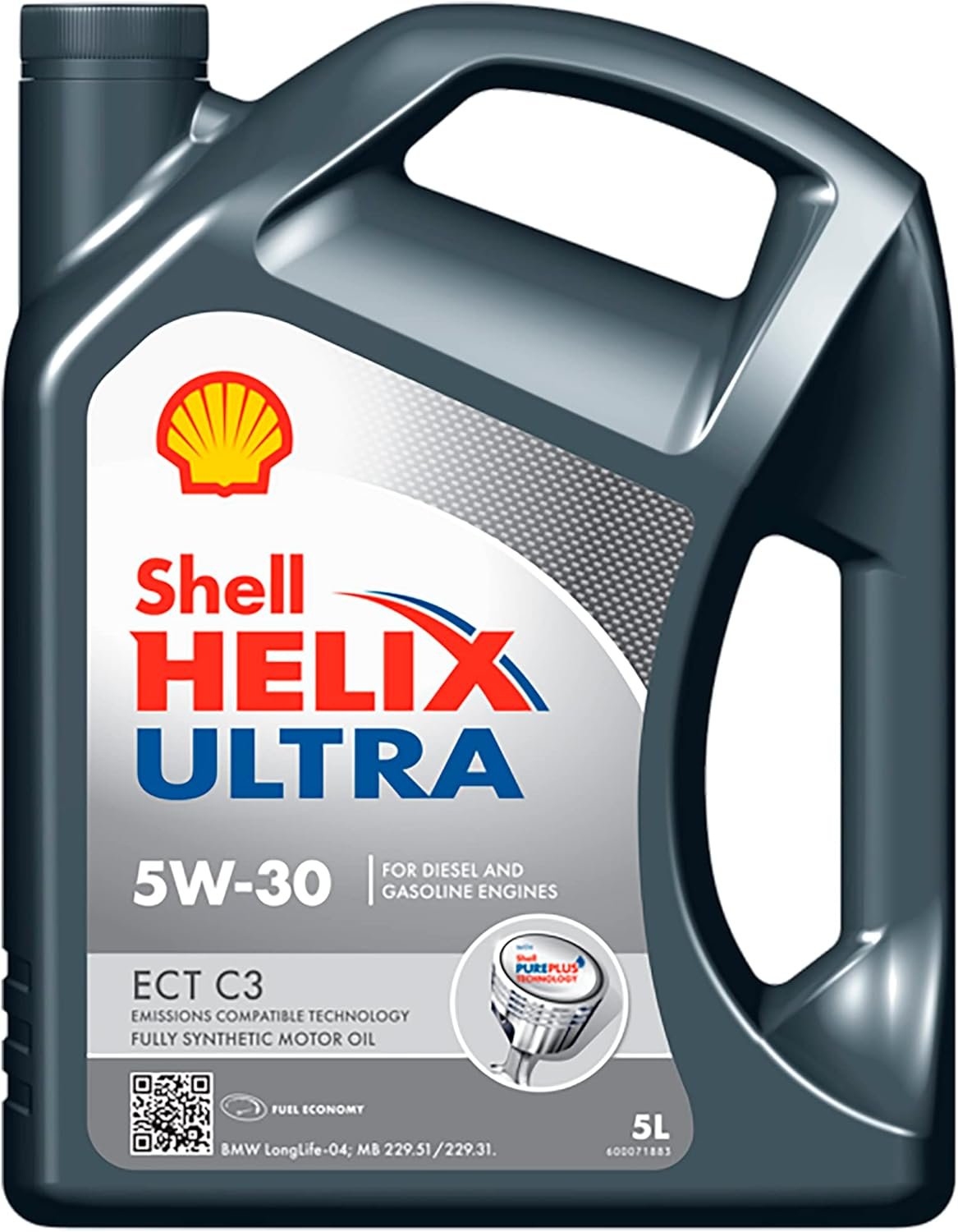
Alternative: Shell Helix Ultra ECT C3 5W-30 Shell’s PurePlus gas-to-liquid base oil technology provides an exceptionally clean base stock, offering strong oxidation resistance. Diesel oil degrades faster than petrol oil due to soot contamination and higher combustion temperatures, making oxidation resistance critical for extended protection. Full VW 507 00 approval. Widely available at £38-50 for 5 litres.
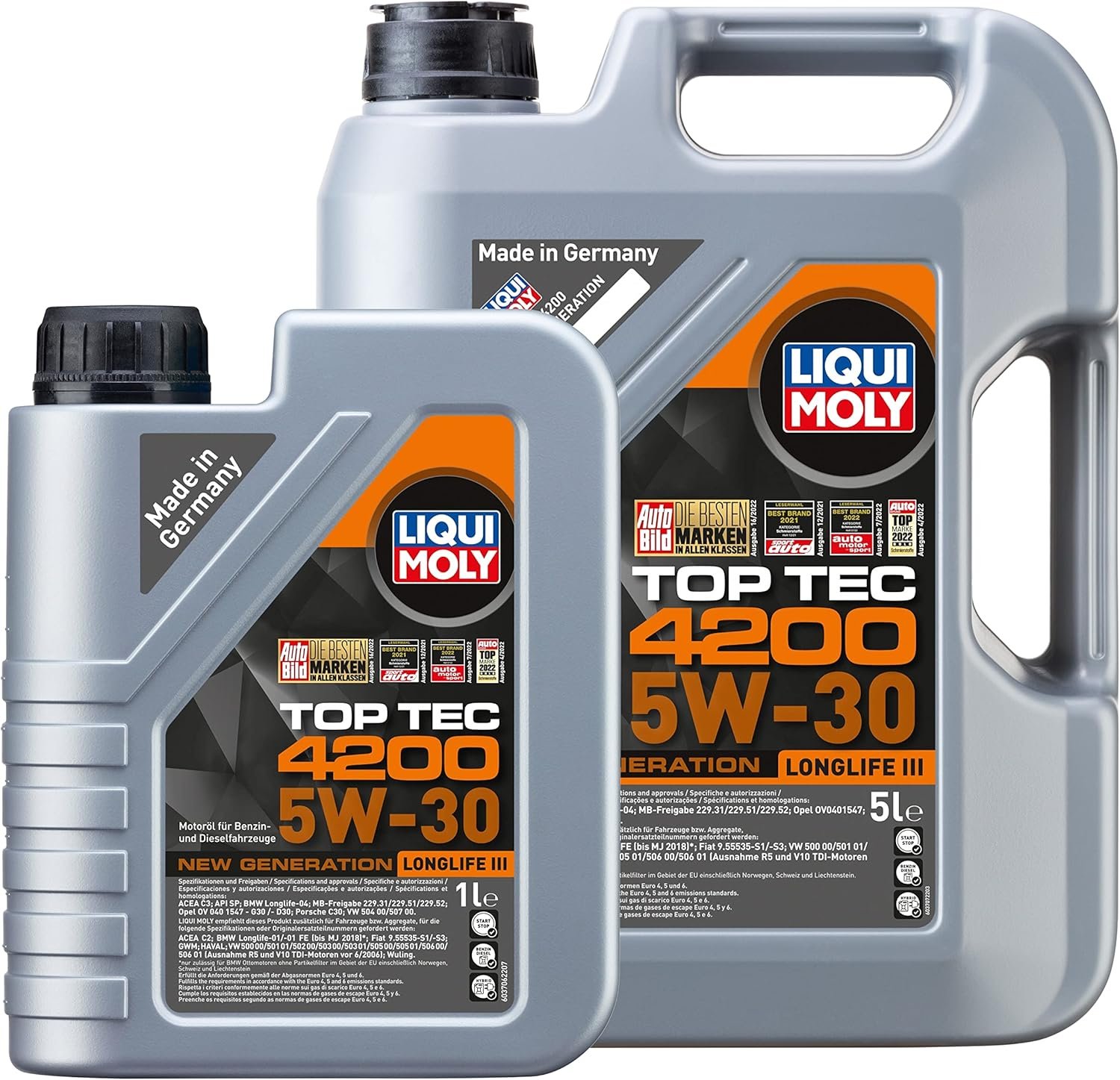
Best Value: Liqui Moly Top Tec 4200 5W-30 German-engineered with full VW 507 00 approval at the most competitive price point. Strong soot-handling capability and a robust detergent package that combats intake and EGR deposits. Reliable cold-start protection down to -30 degrees C. The best balance of protection and value at £35-45 for 5 litres.
Oil Change Intervals
VW Official Recommendation:
- LongLife service: up to 30,000 km or 24 months
- Fixed service: 15,000 km or 12 months
Recommended Practice: 10,000-12,000 km (6,000-7,500 miles) or annually, whichever comes first.
The Tiguan’s heavier body means the 2.0 TDI works harder than the same engine in a Golf or Passat. Higher engine loads produce more soot, more blowby, and faster oil degradation. Combined with the oil pump shaft wear risk, conservative oil change intervals are strongly advisable. Fresh oil with a full additive package provides the best possible protection for the pump shaft drive surfaces.
Consider 7,500 km (5,000 mile) intervals if:
- Primarily short trips under 15 km (DPF cannot complete regeneration)
- Heavy urban stop-and-go driving
- Towing or frequent heavy loads
- Vehicle exceeds 80,000 km
- Any sign of rising oil level on the dipstick (fuel dilution from failed DPF regen cycles)
Other Common Problems
DPF Clogging from Short Trips: The Tiguan’s DPF requires sustained motorway driving to reach the 600 degrees C needed for passive regeneration. Short urban trips — which many Tiguan owners make — prevent this, forcing repeated active regeneration cycles that inject extra diesel into the cylinders. This fuel washes past the piston rings and dilutes the engine oil. A rising dipstick level is the telltale sign. If you drive predominantly in town, check your dipstick monthly. DPF replacement on the Tiguan costs £1,200-2,000.
AdBlue System Failures: The SCR system that the EA288 uses (absent on the older EA189) introduces its own failure modes. NOx sensors degrade and give false readings, triggering warning lights and eventually preventing the engine from starting after a countdown. The AdBlue injector is prone to crystallisation — urea deposits block the injector nozzle, reducing SCR efficiency. The AdBlue pump can also fail. These components cost £200-600 each to replace, and the diagnostic process often involves replacing parts sequentially to isolate the fault.
Coolant Loss: If coolant is disappearing without a visible external leak, the most likely culprits are a faulty plastic coolant flange or a failing water pump. The EA288 uses plastic coolant distribution flanges that become brittle with heat cycling and develop hairline cracks. The water pump seal can also fail, allowing coolant into the timing belt area — a serious secondary risk. Investigate any unexplained coolant loss immediately.
Timing Belt Tensioner: The EA288 uses a timing belt, not a chain. VW specifies replacement at around 130,000 miles, but the tensioner should be monitored from 80,000 miles onward. A tensioner failure allows the belt to skip teeth, and on this interference engine, the result is bent valves and potentially a destroyed head — a repair costing £2,000-3,500.
Conclusion
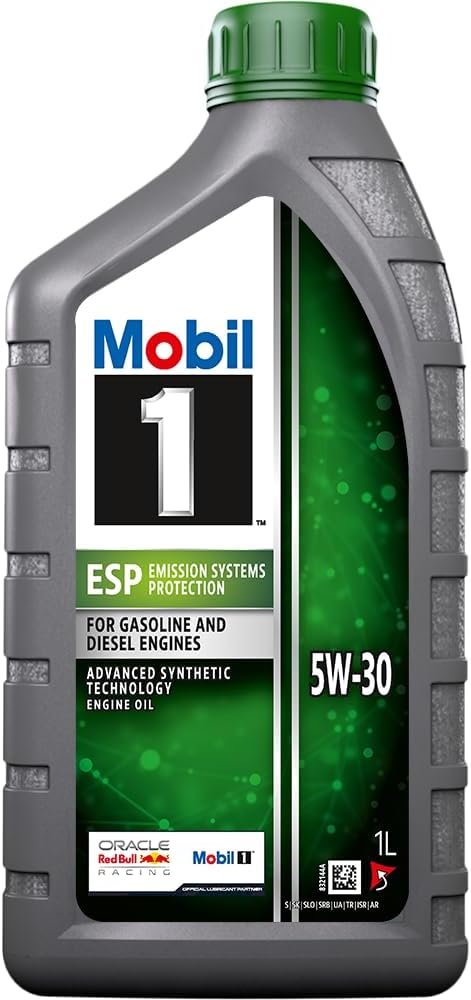
The Volkswagen Tiguan 2.0 TDI 150 HP (DFGA) requires VW 507 00 approved SAE 5W-30 engine oil with a capacity of 4.7 litres including the filter. This is a capable and popular diesel SUV, but the oil pump shaft wear issue makes oil quality and service discipline genuinely critical — not merely advisable. Choose from Castrol EDGE Professional LL 03, Mobil 1 ESP, Shell Helix Ultra ECT C3, or Liqui Moly Top Tec 4200. Verify the VW 507 00 approval number on every bottle.
Maintain 10,000-12,000 km oil change intervals regardless of what VW’s LongLife system suggests. If your driving is predominantly urban, consider 7,500 km intervals. Most importantly, discuss preventive oil pump shaft replacement with a specialist before 50,000 miles — the £400-800 cost is trivial compared to a £6,000-10,000 engine and turbo replacement. The EA288 2.0 TDI is a more modern and refined engine than the EA189 it replaced, but it demands respect. Feed it the correct oil, change it on time, and address the pump shaft proactively, and the Tiguan will deliver years of reliable service.
Our Top Picks
As an Amazon Associate, we may earn from qualifying purchases. This doesn't affect our recommendations — we only suggest oils that hold the exact OEM approval for your engine.