 Oil-
Oil-
As an Amazon Associate, we may earn from qualifying purchases. This doesn't affect our recommendations — we only suggest oils that hold the exact OEM approval for your engine.
Best Engine Oil for Renault Clio 2 1.2 16v (75 HP)
The second-generation Renault Clio, produced from 1998 to 2012 in various forms, is one of the best-selling superminis in European history. The 1.2 16-valve variant powered by the D4F 706 engine was the volume seller across the range, offering 75 HP from a compact, naturally aspirated four-cylinder unit with sixteen valves and a rev-happy character that made it surprisingly enjoyable for daily driving. The D4F is a fundamentally simple and robust engine with no turbocharger, no direct injection, and no variable valve timing to complicate ownership. That simplicity, combined with Renault’s proven casting and machining quality, means the D4F routinely reaches 200,000 km and beyond with basic maintenance. However, “basic” does not mean “any oil will do.” The D4F’s small sump capacity, interference timing belt design, and tendency toward oil consumption at higher mileages all make correct oil selection and change discipline genuinely important. This guide covers the right specification, capacity, and recommended products to keep your Clio 2 1.2 16v running reliably.
Quick Answer: Recommended Oil
For Renault Clio 2 1.2 16v (75 HP) D4F 706:
- Specification: Renault RN0700 with ACEA A3/B4
- Viscosity: SAE 5W-40 (alternative: 10W-40 in warmer climates or high-mileage engines)
- Oil capacity: 4.0 litres with filter (3.6 L without)
Key point: The D4F requires oil meeting at least ACEA A3/B4, which guarantees adequate high-temperature film strength and anti-wear performance for the sixteen-valve head’s compact valve train. Oils carrying the Renault RN0700 approval are preferred, as they include Renault-specific testing for sludge resistance and valve train durability. Newer Renault norms like RN17 are designed for modern turbocharged engines and are unnecessary here.
The D4F 706 Engine
The D4F 706 is a 1,149cc inline four-cylinder with an aluminium alloy block and head, dual overhead camshafts (DOHC), and sixteen valves — four per cylinder. This distinguishes it from the older D7F 8-valve engine found in the Twingo 1 and earlier Clios. The sixteen-valve head gives the D4F a broader power band, better breathing at higher RPM, and a noticeable improvement in refinement over its 8-valve predecessor. Peak power is 75 HP at 5,500 RPM with maximum torque of 105 Nm at 3,500 RPM.
The engine is naturally aspirated with multipoint fuel injection. There is no turbocharger, no variable valve timing, and no exhaust gas recirculation system. Fuel consumption in mixed driving sits around 45-50 MPG, and the engine runs comfortably on standard 95 RON petrol. The compression ratio of 9.8:1 is moderate, contributing to the engine’s tolerance of varying fuel quality across European markets.
The defining maintenance characteristic of the D4F is its timing belt. This is an interference engine: if the belt snaps, the pistons strike the valves and the resulting damage typically destroys the cylinder head. Renault specifies belt replacement every 60,000 km or 5 years. This is not optional, and the consequences of deferral are catastrophic. When replacing the belt, always fit a new tensioner and water pump simultaneously. The complete job costs approximately £250-350 at an independent specialist — a fraction of the £800-plus cost of a damaged head.
Understanding the Oil Specifications
Renault RN0700
RN0700 is Renault’s oil approval norm for naturally aspirated petrol engines without aftertreatment devices. It was developed specifically for the generation of Renault engines that includes the D4F, D7F, and K-series units. The norm requires strong detergency to prevent sludge formation in small-capacity sumps, robust anti-wear properties for valve train protection, and good oxidation resistance across extended drain intervals. RN0700 maps onto ACEA A3/B4 performance levels but includes additional Renault-specific bench testing.
For the D4F 706, RN0700 is the correct Renault specification. You will sometimes see RN0710 mentioned in generic parts databases — this is the diesel equivalent and not relevant to the petrol D4F.
ACEA A3/B4
The ACEA A3/B4 standard defines a high-performance oil with a high-temperature/high-shear (HTHS) viscosity above 3.5 mPa.s, ensuring stable oil film thickness even when the engine is fully warmed and under load. For the D4F’s sixteen-valve DOHC head, where cam lobes bear directly on small-diameter followers at high speed, this film strength is essential.
If you cannot source oil with the RN0700 approval explicitly printed on the container, any quality fully synthetic or semi-synthetic 5W-40 meeting ACEA A3/B4 will protect the D4F perfectly well.
Viscosity: 5W-40 vs 10W-40
SAE 5W-40 is the primary recommendation. The 5W cold rating ensures rapid oil flow at startup in British winter temperatures, reducing the dry-running period that causes the majority of cumulative engine wear. The 40 hot rating provides a robust oil film at operating temperature.
SAE 10W-40 is a sensible alternative for engines with over 150,000 km where piston ring wear has increased oil consumption. The slightly thicker cold viscosity helps reduce oil passing the rings on cold start. Semi-synthetic 10W-40 oils are also significantly cheaper than full synthetic 5W-40, which can be a pragmatic consideration for an older vehicle where frequent changes with adequate oil matter more than using the most expensive product.
Technical Specifications: 1.2 16v D4F 706
| Specification | Value |
|---|---|
| Displacement | 1,149cc (1.2 litres) |
| Layout | Inline-4, transverse, aluminium block and head |
| Valvetrain | DOHC, 16 valves, timing belt (interference) |
| Bore x Stroke | 69.0mm x 77.0mm |
| Compression Ratio | 9.8:1 |
| Power | 75 HP @ 5,500 RPM |
| Torque | 105 Nm @ 3,500 RPM |
| Fuel Type | Petrol, 95 RON |
| Aspiration | Naturally aspirated |
| Recommended Viscosity | SAE 5W-40 |
| Alternative Viscosity | SAE 10W-40 |
| Oil Capacity (without filter) | 3.6 litres |
| Oil Capacity (with filter) | 4.0 litres |
| ACEA Norm | A3/B4 |
| OEM Norm | Renault RN0700 |
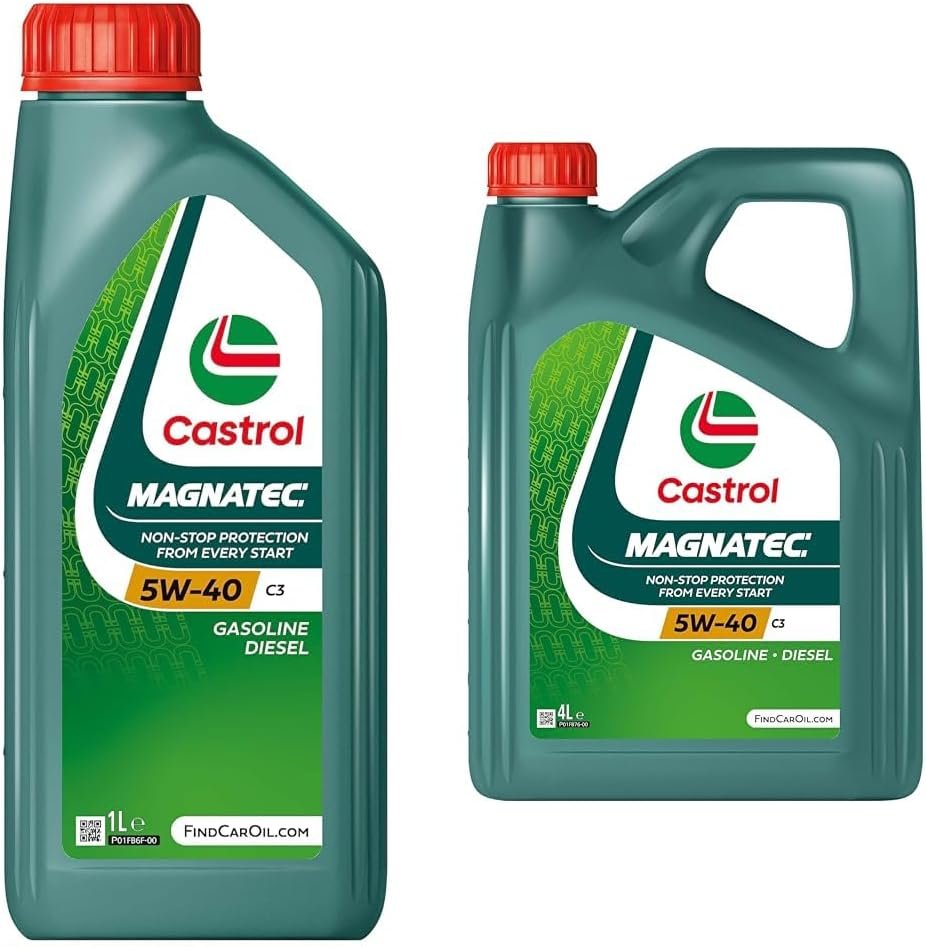
Best Value: Castrol Magnatec 5W-40 Castrol’s Magnatec range uses molecules that cling to engine surfaces during shutdown, reducing dry-start wear — a genuine benefit for a city car subjected to frequent cold starts on short trips, which describes the daily life of most Clio 2s. Meeting ACEA A3/B4, it delivers dependable protection at £28-32 for 5 litres and is available at virtually every UK motor factor and supermarket.
Alternative: Total Quartz 9000 5W-40 TotalEnergies (the same group as Elf) offers the Quartz 9000 with RN0700 approval and excellent oxidation resistance. Its base oil technology is closely related to the Elf Evolution range, providing similar sludge prevention and valve train protection at a competitive £25-30 for 5 litres. A strong option for owners who prefer frequent changes with a quality, Renault-approved oil at the lowest cost.
Oil Change Intervals
Renault Official Recommendation:
- 15,000 km or 12 months, whichever comes first
Recommended Practice: 10,000 km or 12 months for mixed driving. 7,500 km for predominantly short urban trips.
The D4F’s naturally aspirated design means oil is not subjected to the extreme heat cycling of turbocharged engines, and the absence of direct injection means less fuel dilution in the sump. However, the Clio 2 is overwhelmingly used as a city car — exactly the driving pattern that degrades oil fastest. Short journeys where the engine never fully warms up allow moisture and fuel to accumulate in the oil, diluting the additive package and accelerating acid formation. The D4F’s modest 4.0-litre sump means each litre of oil works harder than in engines with larger capacities.
For a Clio 2 used primarily in town, 7,500 km or annual changes are wise. The total cost of an oil change using quality 5W-40 is approximately £30-40 including the filter — negligible compared to the cost of addressing oil-related engine wear.
Why Correct Oil Matters for the D4F
The D4F’s sixteen-valve DOHC head has twice as many moving parts in its valve train as the older 8-valve D7F. Each of the two camshafts rides on multiple journal bearings, and each cam lobe acts on a compact follower. These contact points depend entirely on the oil film for protection, and ACEA A3/B4 oil ensures the high-temperature/high-shear viscosity stays above the 3.5 mPa.s threshold needed to prevent metal-to-metal contact under load.
The small sump volume concentrates contaminants faster than in engines with 5 or 6 litres of capacity. Combustion byproducts, moisture from cold starts, and fine metallic particles from normal wear all accumulate in the oil. Quality oil with strong detergent and dispersant properties keeps these contaminants suspended and prevents them from depositing as sludge in galleries, the oil pickup screen, or around piston rings. Sludge in the oil pickup is a particular risk — partial blockage starves the bearings of oil under high-RPM driving and causes catastrophic failure with little warning.
Common D4F Problems Related to Oil
Oil Consumption at High Mileage: The single most common age-related complaint. As the D4F accumulates mileage beyond 150,000 km, piston ring and valve stem seal wear allows oil to enter the combustion chamber. Symptoms include blue-grey smoke on startup or hard acceleration and a gradually dropping dipstick level. Consumption of up to 0.5 litres per 5,000 km is typical for a well-worn D4F; beyond 1 litre per 5,000 km, the rings or seals likely need attention. Switching from 5W-40 to 10W-40 often reduces consumption measurably. Check the dipstick weekly on high-mileage engines and carry a spare litre in the boot.
Valve Clearance Drift: The D4F uses mechanical tappets requiring periodic adjustment. Renault recommends checking valve clearances every 100,000 km. Exhaust valves on cylinder 4, the furthest from the water pump and therefore the hottest, tend to tighten first. Tight exhaust valves cannot transfer heat to the seat properly, leading to valve burning. A clearance check and adjustment takes roughly an hour and is inexpensive — neglecting it risks a burnt valve and cylinder head work costing several hundred pounds.
Ignition Coil and Injector Failures: While not directly oil-related, failing ignition coils and injectors cause misfires that allow unburnt fuel to wash the cylinder walls, diluting the oil film and accelerating ring and bore wear. A persistent misfire should be diagnosed and repaired promptly to protect the engine internals. Symptoms include rough idle, flashing engine management light, and noticeably increased fuel consumption.
Oil Leaks: The D4F commonly develops leaks from the rocker cover gasket and front crankshaft seal as rubber components harden with age and heat cycles. These leaks are inexpensive to repair and should be addressed before the cumulative oil loss drops the sump level enough to compromise lubrication. A slow leak combined with the D4F’s relatively small sump capacity can bring the oil level dangerously low between services if unchecked.
Conclusion
The Renault Clio 2 1.2 16v with the D4F 706 engine requires SAE 5W-40 engine oil meeting ACEA A3/B4 and ideally carrying the Renault RN0700 approval, with a capacity of 4.0 litres including the filter. The D4F is a proven, mechanically simple engine that rewards basic maintenance with exceptional longevity — 200,000 km and beyond is entirely realistic.
Elf Evolution 900 SXR 5W-40 at £25-30 for 5 litres is the natural OEM choice, with Mobil Super 3000 X1, Castrol Magnatec, and Total Quartz 9000 all providing excellent alternatives at £25-35 for 5 litres. Change the oil every 10,000 km or annually — more often for predominantly urban use — and check the dipstick weekly on higher-mileage engines. Respect the timing belt interval (60,000 km or 5 years, no exceptions), keep the valve clearances in check every 100,000 km, and address oil leaks promptly. The D4F asks very little of its owner, but what it asks is non-negotiable. Get these basics right and the Clio 2’s little sixteen-valve engine will outlast most of the car around it.
Our Top Picks
As an Amazon Associate, we may earn from qualifying purchases. This doesn't affect our recommendations — we only suggest oils that hold the exact OEM approval for your engine.